AI
The Hidden Cost of Manual Lead Generation in 2026
June 24, 2026
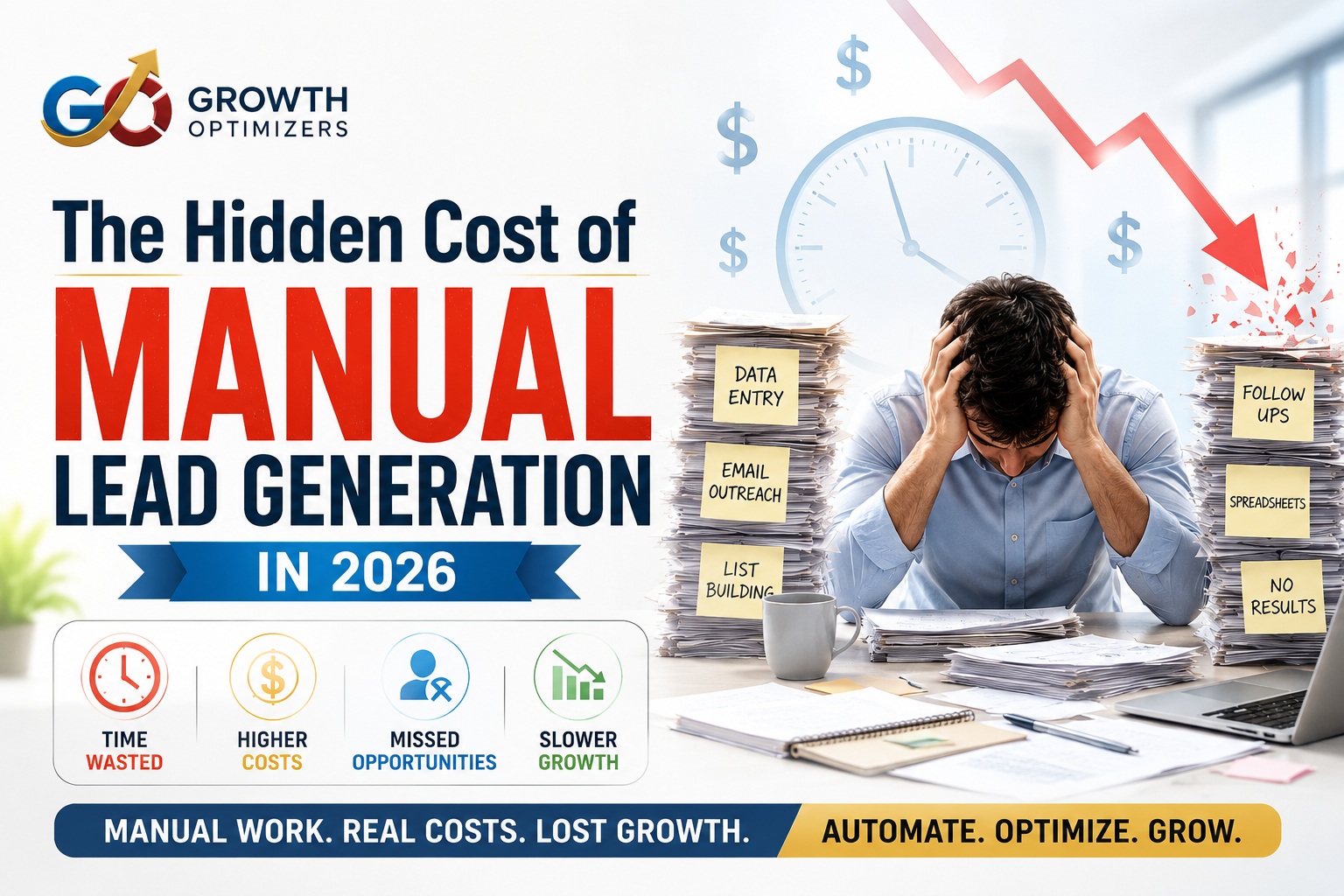
Are Your Lead Generation Efforts Costing More Than You Think?
Businesses are investing more in marketing than ever before. From SEO and paid advertising to email campaigns and social media marketing, companies are spending significant budgets to attract potential customers. On paper, everything looks positive. Website traffic is growing, lead numbers are increasing, and marketing reports appear healthy.
Yet many businesses still struggle to achieve consistent revenue growth.
The reason is surprisingly simple. Generating leads is only half the equation. What happens after a lead enters your pipeline often determines whether that opportunity becomes a paying customer or disappears altogether.
This is where The Hidden Cost of Manual Lead Generation in 2026 begins to reveal itself.
Many organizations are still relying on manual processes to manage inquiries, assign leads, track conversations, and follow up with prospects. While these methods may have worked a few years ago, they are becoming increasingly inefficient in a business environment where speed, personalization, and consistency are critical.
A delayed response, missed follow-up, or poorly managed lead might seem like a minor issue. However, when these problems occur repeatedly across hundreds of prospects, the financial impact can be substantial.
Why Manual Lead Generation Is Becoming a Growth Bottleneck
Modern buyers move quickly.
Before contacting your business, prospects often spend time researching solutions, comparing competitors, reading reviews, and evaluating different providers. By the time they submit a contact form or request a consultation, they are usually much closer to deciding than many businesses realize.
This means expectations have changed.
Today's buyers expect:
Fast responses
Personalized communication
Consistent follow-ups
A seamless customer experience
Businesses relying on manual systems often struggle to meet these expectations. Sales teams become overwhelmed, leads fall through the cracks, and opportunities are lost before meaningful conversations even begin.
The challenge isn't generating interest. The challenge is managing that interest efficiently.
The Hidden Costs Most Businesses Never Measure
When evaluating lead generation performance, most organizations focus on metrics such as cost per lead, traffic growth, and conversion rates. While these metrics are important, they don't always reveal the operational inefficiencies happening behind the scenes.
Here are some of the biggest hidden costs associated with manual lead generation.
Slow Follow-Up Times
One of the most common issues with manual lead management is delayed follow-up.
When a prospect submits an inquiry, every minute matters. A slow response can reduce engagement and increase the likelihood of the prospect contacting a competitor.
Many businesses unknowingly create delays because leads must be manually assigned, reviewed, or prioritized before any action takes place.
As lead volumes increase, these delays become even more difficult to manage.
Lead Leakage
Lead leakage occurs when opportunities are lost due to process failures.
This can happen when:
Follow-ups are forgotten
Contact details are entered incorrectly
Leads are assigned to the wrong person
CRM records are incomplete
Tasks are overlooked
Individually, these issues may seem insignificant. Collectively, they can result in a substantial loss of revenue over time.
Higher Customer Acquisition Costs
Businesses often respond to declining sales by increasing marketing spend.
While additional advertising can generate more leads, it doesn't solve underlying process issues.
If your sales team struggles to manage existing opportunities, generating more leads simply increases the workload without necessarily improving results.
In many cases, improving lead management delivers a better return on investment than increasing marketing budgets.
Reduced Sales Productivity
Sales professionals are most valuable when they are speaking with prospects and closing deals.
Unfortunately, many teams spend a significant portion of their day handling administrative tasks such as:
Updating CRM records
Scheduling meetings
Managing spreadsheets
Organizing customer information
These activities are important, but they don't directly generate revenue.
The more time spent on administration, the less time available for selling.
Inaccurate Forecasting
Reliable forecasting depends on accurate data.
When lead information is managed manually, data quality often suffers. Duplicate records, missing details, and inconsistent updates can make it difficult for leadership teams to understand pipeline performance.
Without accurate reporting, businesses may struggle to identify bottlenecks, allocate resources effectively, or make informed growth decisions.
How Automation Is Changing Lead Generation in 2026
The most successful companies are no longer relying solely on manual processes to manage customer acquisition.
Instead, they are implementing systems that automate repetitive tasks and improve operational efficiency.
An Automated Lead Generation System can help businesses:
Capture leads instantly
Assign inquiries automatically
Trigger follow-up sequences
Schedule meetings
Update CRM records
Track customer interactions
Prioritize high-intent prospects
These capabilities help reduce delays, improve consistency, and create a more efficient sales process.
The Role of AI in Modern Lead Management
Artificial intelligence is becoming a key component of business growth strategies.
Rather than replacing sales teams, AI helps them work more effectively.
Modern AI Lead Management systems can analyze customer behavior, identify buying signals, score prospects, and recommend next steps based on real-time data.
This allows businesses to focus resources on the opportunities most likely to convert.
As competition increases, the ability to identify and prioritize high-value prospects becomes a significant advantage.
What a High-Performing Lead Generation System Looks Like
Businesses that consistently generate revenue from their marketing efforts typically share a few common characteristics.
They have systems that ensure:
Every lead receives attention
Follow-ups happen consistently
Customer data remains accurate
Sales teams focus on qualified prospects
Performance is tracked in real time
These organizations understand that growth is not simply about generating more leads. It's about managing opportunities more effectively.
By combining automation, CRM technology, and AI-powered workflows, businesses can create a scalable lead generation process that supports long-term growth.
Conclusion
The Hidden Cost of Manual Lead Generation in 2026 extends far beyond administrative inefficiencies. It impacts response times, conversion rates, customer acquisition costs, sales productivity, and overall business growth.
Many organizations believe they need more leads when the real opportunity lies in improving how existing leads are managed.
Businesses that continue relying on manual processes may find themselves losing revenue through missed opportunities and operational bottlenecks. Those that embrace automation and intelligent lead management systems will be better positioned to improve efficiency, increase conversions, and scale sustainably in the years ahead.
FAQs
1. What is manual lead generation?
Manual lead generation involves capturing, tracking, and managing leads through human-driven processes rather than automated systems.
2. Why is manual lead generation becoming less effective?
Buyer expectations have changed significantly. Customers expect faster responses and personalized experiences that manual processes often struggle to deliver consistently.
3. What is lead leakage?
Lead leakage occurs when potential customers are lost because of missed follow-ups, process inefficiencies, or poor lead management practices.
4. How does automation improve lead management?
Automation reduces repetitive tasks by handling lead capture, assignment, follow-ups, CRM updates, and communication workflows automatically.
5. Can small businesses benefit from automation?
Yes. Automation allows small businesses to improve efficiency and manage growth without significantly increasing staffing requirements.
6. How does AI support sales teams?
AI helps identify qualified leads, prioritize opportunities, automate routine tasks, and provide insights that improve decision-making.
7. What are the signs of inefficient lead management?
Common signs include delayed responses, inconsistent follow-ups, declining conversion rates, poor CRM data quality, and overwhelmed sales teams.
8. What is an Automated Lead Generation System?
An Automated Lead Generation System uses software and workflows to capture, qualify, and manage leads with minimal manual intervention.
9. Does automation replace human sales professionals?
No. Automation supports sales teams by eliminating repetitive tasks and allowing them to focus on relationship-building and closing deals.
10. What is the first step toward improving lead generation processes?
Start by identifying bottlenecks in your current workflow and implementing automation where delays and inefficiencies have the greatest impact.
The week holds 5 seats. No more.
We cap the intake on purpose small rooms, sharper acoustics. Make the cut and you get a desk inside the system that's already moved millions in pipeline.
Door policy · You're on the list if
What's in the envelope
Worth $299 · FreeFree Growth Blueprint Call
- A full funnel walkthrough every floor, every leak named out loud
- We point at the line items quietly setting fire to your growth
- A 30-60-90 day roadmap, drafted in your handwriting, yours to keep